Tag: St. Bartholomew’s Day
On This Day in Herstory–the Wedding of Marguerite de Valois and Henri of Navarre
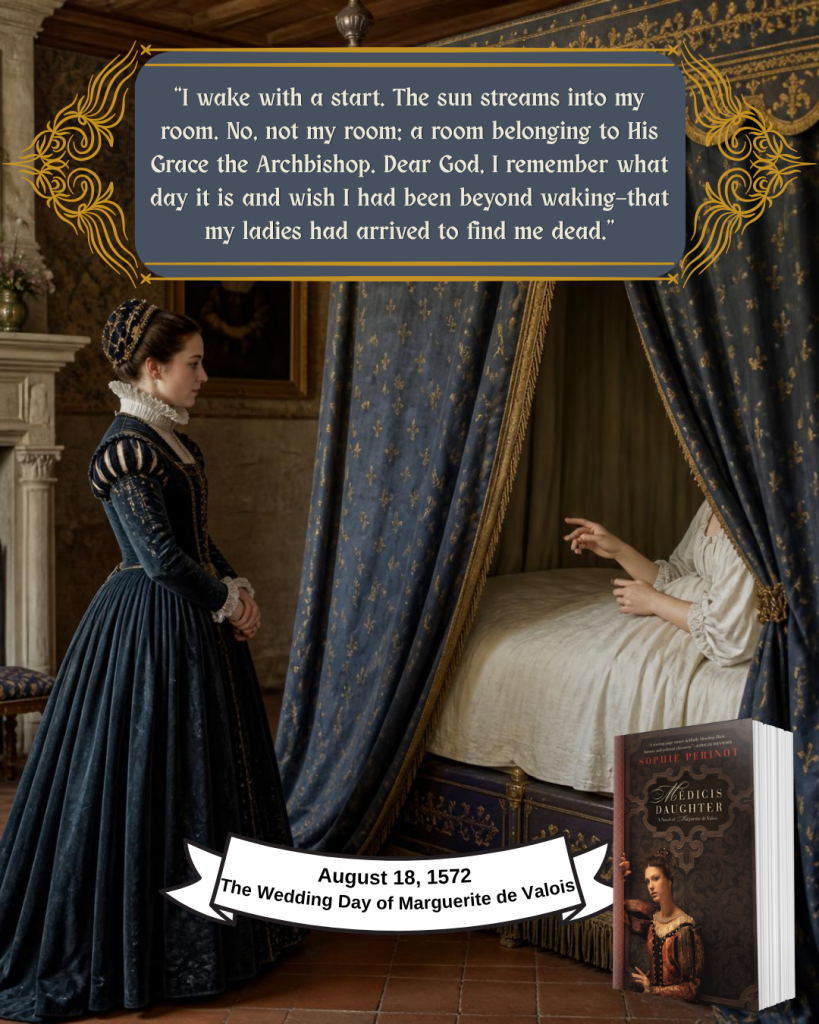
ON THIS DAY IN HERSTORY—A dreaded wedding that will lead to bloodshed.
When Marguerite de Valois first arrived at Court to be with her mother—the powerful Queen Catherine de Médicis—she was eager to be an obedient daughter, and thus embraced her duty to make a political marriage.
Then Margot found herself charmed by the powerful and charismatic Duc de Guise and fell in love with him. This fact didn’t matter one whit when it came to the Princess’s destiny.
While her heart belonged to the Duc de Guise, Margot’s hand in marriage was brokered to Henri of Navarre, her cousin and a powerful Huguenot leader. The match was publicly presented part of a truce and to calm the violence and bring an end to the Wars of Religion in France between the Crown/Catholics and the Protestants. Many accept that at face value and the city of Paris filled with Protestant guests for the big day.
The wedding —which Margot had come to dread—Took place on August 18, 1572. It would be followed only days later by the bloodshed of the St. Bartholomew’s Day Massacre. The impact of that horrific event had a profound effect on Margot’s relationship with her mother.
The Anniversary of the Death of King Charles IX
Today’s post features a Valois historical event closely linked to my novel Medicis Daughter. Four-hundred-and-fifty-two years ago today, Marguerite de Valois’ second oldest brother, King Charles IX of France passed away in his twenties.
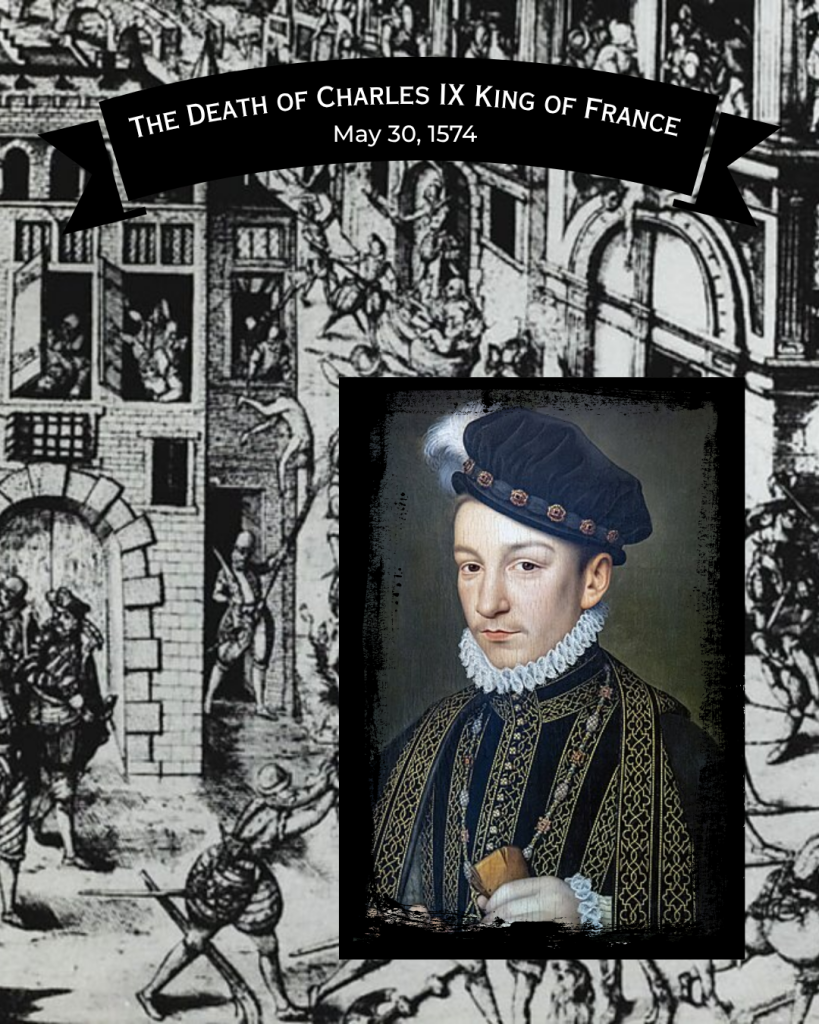
Charles the IX was the second son of Henry II and Catherine de Médicis. He became king upon the death of his brother Francis II, with his mother acting as his regent. Even after he was proclaimed of age on August 17, 1563, he remained under his mother’s domination (was there anyone Catherine couldn’t dominate?).
In 1571 Charles began to take his own path, after meeting and befriending the Protestant leader Gaspard de Coligny. Already jealous of the victories of his brother, the Duc d’Anjou (later King Henry III), over the Huguenots at Jarnac and Moncontour in 1569, Charles decided to favor a Huguenot plan for French intervention against the Spanish in the Netherlands. He sanctioned a defensive alliance with England and Huguenot aid to the Dutch.
Unfortunately for the King, his mother disliked his new policy and more than that was alarmed by Admiral Coligny’s ascendancy at Court and in her son’s inner circle. After an attempt on Coligny’s life (doubtless organized by Catherine) the Queen Mother persuaded Charles to order the massacre of St. Bartholomew’s Day. The resulting bloodshed was apocalyptic. Bodies littered the streets of Paris and were so thick in the Seine that witnesses testified one could walk across the river without wetting their feet.
The massacre haunted Charles the short life he had left. His health deteriorated, and he became increasingly melancholy. He died before his twenty-fourth birthday
Both Charles and The St. Bartholomew’s Day Massacre play central roles in Medicis Daughter. The massacre occurred shortly after Princess Marguerite’s marriage to Henri of Navarre, with guests who had traveled to witness the event slaughtered in Paris and some within the walls of the Palace itself.