Author: sophie
An October Reminder–Not all Historical Facts are Fixed In Stone
One thing it is vital to keep in mind whether you are writing historical fiction, reading it, or studying history—what we “know” for certain in history often changes. New studies, new information, new scholarship and interpretation can challenge and change accepted facts, and undercut theories that have stood for decades or even longer.
I have an example from A Day of Fire: A Novel of Pompeii.” For many years the eruption of Vesuvius was set down as having happened in August of 79 A.D. The prolific and influential historian Mary Beard subscribed to this date as did pretty much every historian specializing in ancient Rome. Then new analysis was done and new physical evidence unearthed—including:
Autumnal fruits including pomegranates, (which ripen in late September and October in Italy)as well as dried dates, prunes, and figs, typically harvested in late summer during new excavations;
Jars with fermenting wine, indicating that the grapes had been harvested and wine production was well underway at the time Vesuvius blew.
AND—the most compelling evidence—a Roman coin minted after September 7 or 8 of the year 79 CE found in a stratification that ruled out the possibility that it was dropped at the site later by looters or investigators
SO, based on that evidence —presto change—the date of the destruction of Pompeii was moved from August to late September. THEN MOVED AGAIN, when FURTHER EXCAVATIONS AT THE CITE UNEARTHED GRAFFITI DATED IN OCTOBER OF 79 CE
LAST TIME I CHECKED the date of Pompeii’s destruction is considered to be in late OCTOBER. But you know that could shift further as more artifacts are uncovered.
THAT’S JUST ONE fascinating reminder that we ought not be too sanguine about what we know to be “the truth.”
[This post was taken from part of a biannual University lecture that I give]
Good Little Literate Kitty!
Someone is going to be getting extra treats (Dreamies—the UK cat treat that drives them mad) before bed tonight 😉
Seriously though—the mother/daughter relationship may always be a bit perilous but can you imagine having Queen Catherine de Médicis for your mum?
Poor Princess Marguerite de Valois didn’t have to imagine. But she did have to learn how to navigate her mother’s (technically her brother’s) court. No small feat in a situation where a wrong move could be your last. And that was even BEFORE her ill-fated wedding celebrations.
Margot’s heart belonged to the handsome Duc de Guise, but her hand was given to her cousin Henri of Navarre, a Huguenot leader and a notorious heretic looking to seal a tenuous truce. The invitations to that multi-day party should have included a warning to dress for a massacre as well as dancing.
Fancy a Fancy Cuppa?
Fancy a fancy cuppa?
When I talk about why I chose York as my new(ish) home I always mention the joys of “living in history, lingering over teas and knocking around pubs.”
So, today I thought I’d focus on the “lingering over teas” aspect of my life in the UK by sharing some snapshots from the latest spot I visited (and LOVED) for that wonderful, traditional, afternoon pastime: The Old York Tea Room.
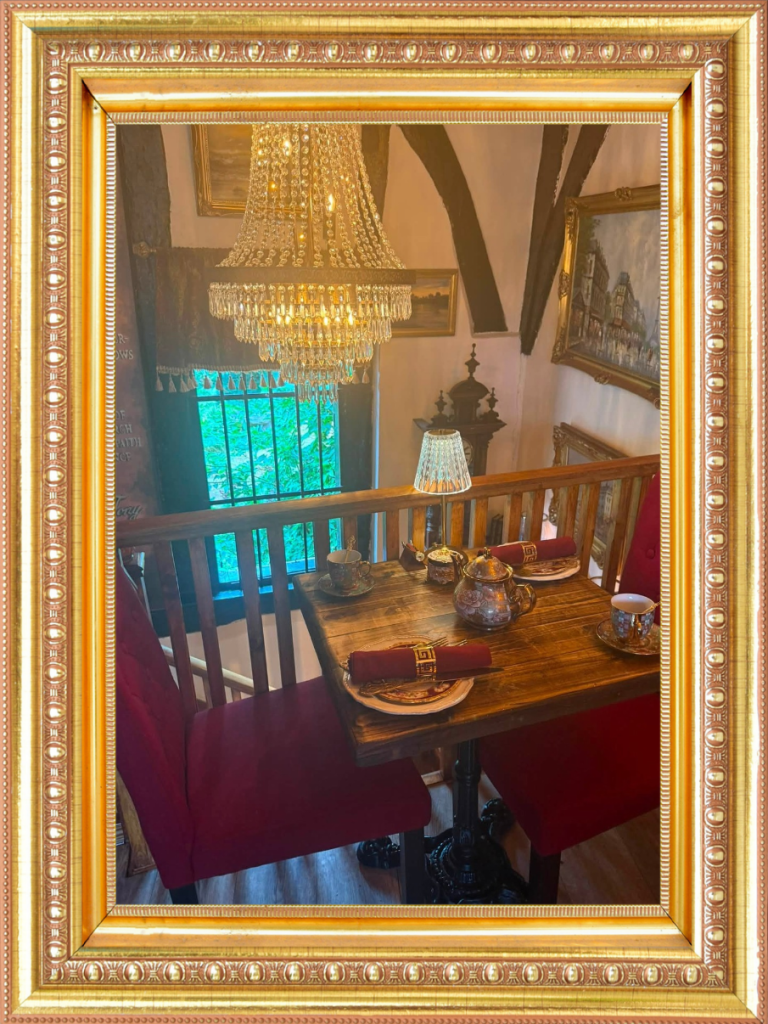
Located on Goodramgate, in building dating to the early 14th century, The Old York Tea Room is teeny-tiny. Those sitting down for tea go upstairs to a space that holds less than a dozen tables. Rather than hampering the experience, the cozy nature of the space adds to the ambience. And, at least in my case, lead to a fascinating conversation with two fervent York fans from the Netherlands (they visit every year).
The atmosphere of the Old York TeaRoom is gloriously sumptuous and over the top, thanks to it’s detailed and carefully planned decor. It is hard not to imagine yourself as a member of the landed gentry as you relax and sip your tea. And there is nothing wrong with that.
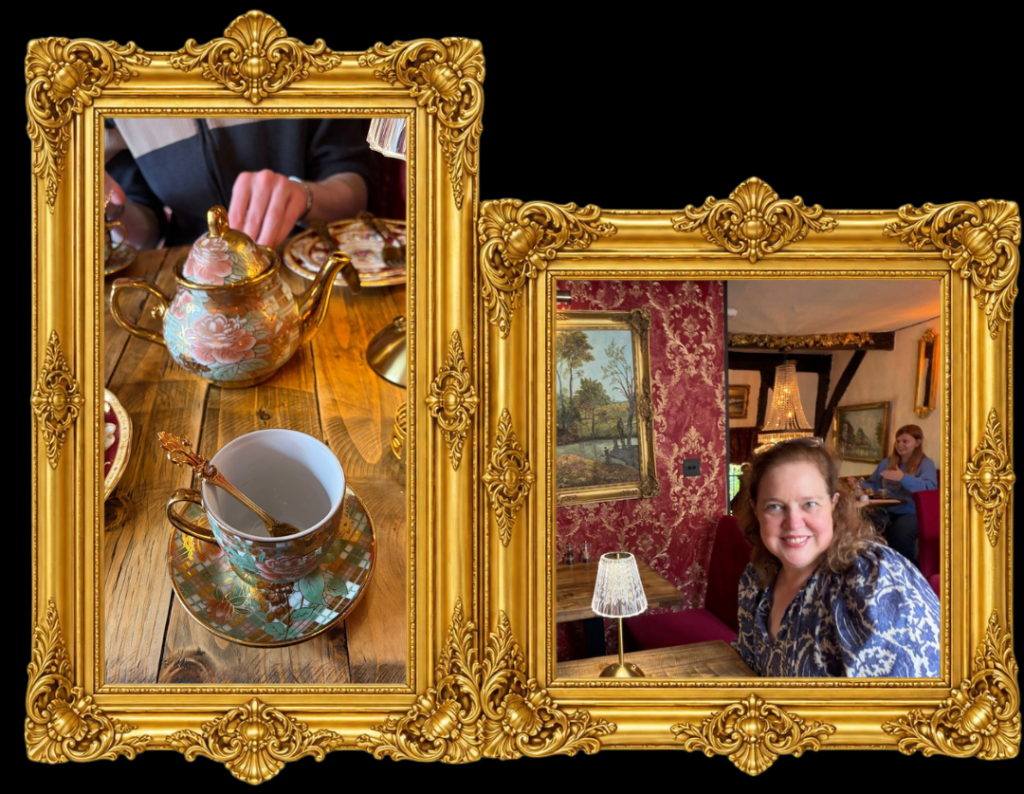
Enjoy the pictures, and tell me: have you been to a proper afternoon tea? If so, what’s your favorite type of tea? How about your favorite goodie (sweet or savory)?
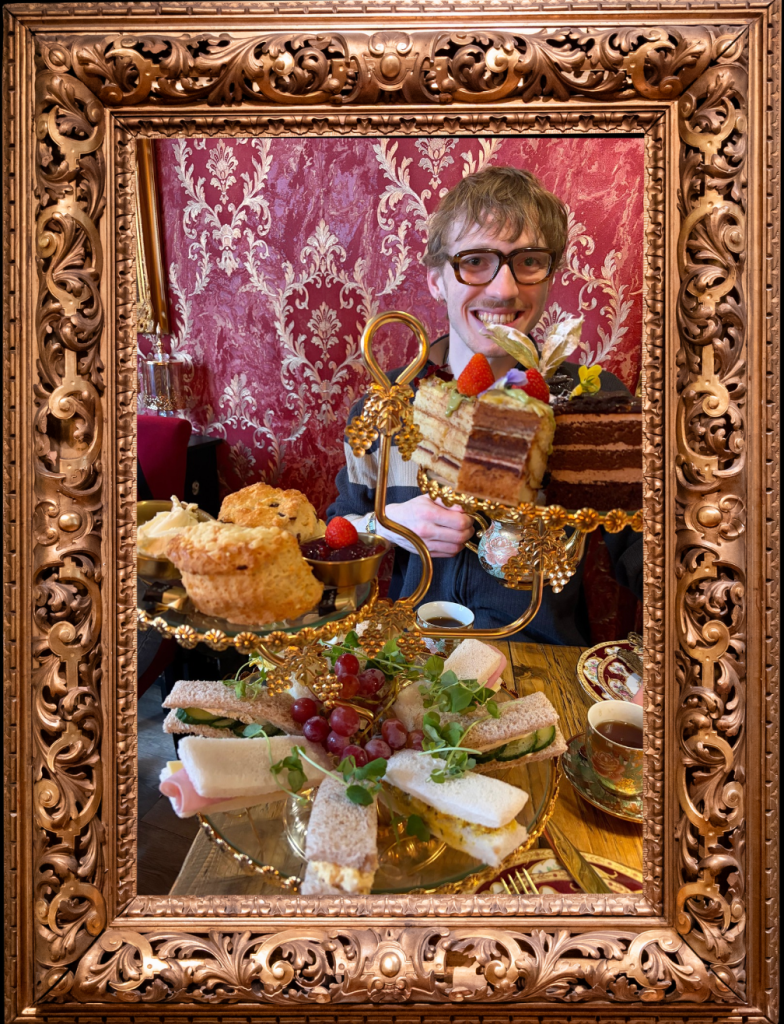
Laurie Reads About Ancient Pompeii (#CatsWhoRead Continues)
Laurie is well known as an adventurer but this version of “the floor is Lava” may be one step too far 😉
Laurie LOVED our six-author novel—A Day of Fire: A Novel of Pompeii—though he was disappointed that no cats were featured. I explained to him that very few cat remains were found in the excavation of Pompeii. He replied that just means cats were smart enough to get out. So we did a little searching and here is the link to an interesting blob post speculating on “Why no cat remains were found during the excavations in Pompeii.” Below you will find a description of A Day of Fire.
🔥🔥A DAY OF FIRE 🔥🔥
Pompeii was a lively resort flourishing in the shadow of Mount Vesuvius at the height of the Roman Empire. When Vesuvius erupted in an explosion of flame and ash, the entire town would be destroyed. Some of its citizens died in the chaos, some escaped the mountain’s wrath . . . Six authors bring to life overlapping stories of patricians and slaves, warriors and politicians, villains and heroes who cross each other’s path during Pompeii’s fiery end. But who will escape, and who will be buried for eternity?
On This Day in Herstory–the Wedding of Marguerite de Valois and Henri of Navarre
ON THIS DAY IN HERSTORY—A dreaded wedding that will lead to bloodshed.
When Marguerite de Valois first arrived at Court to be with her mother—the powerful Queen Catherine de Médicis—she was eager to be an obedient daughter, and thus embraced her duty to make a political marriage.
Then Margot found herself charmed by the powerful and charismatic Duc de Guise and fell in love with him. This fact didn’t matter one whit when it came to the Princess’s destiny.
While her heart belonged to the Duc de Guise, Margot’s hand in marriage was brokered to Henri of Navarre, her cousin and a powerful Huguenot leader. The match was publicly presented part of a truce and to calm the violence and bring an end to the Wars of Religion in France between the Crown/Catholics and the Protestants. Many accept that at face value and the city of Paris filled with Protestant guests for the big day.
The wedding —which Margot had come to dread—Took place on August 18, 1572. It would be followed only days later by the bloodshed of the St. Bartholomew’s Day Massacre. The impact of that horrific event had a profound effect on Margot’s relationship with her mother.
A Quick Reminder of the “Other Me”
Just want to put Evie-me back on my readers’ radar. If you enjoyed my historical novels, I PROMISE you will LOVE Lady Margaret Dove, the amateur detective at the center of the 1666 plot in Evie-me’s dual-timeline AND BY FIRE.
Margaret and her side-kick, a royal fireworks maker, undertake a search for close friend after he goes missing during the Great Fire of London (click here for some fearsome facts about The Great Fire). While looking for this bookseller, they discover foul play in the supposedly accidental destruction of St. Paul’s Cathedral during the massive conflagration that was the Great Fire … and they being to suspect that same devilry led to murder.
Ultimately, their conclusions and “case notes” fall into the hands of the novel’s modern-day detective—DI Nigella Parker with the City Police of London—and her side-kick, a DI from Scotland Yard (to learn or about London’s two separate police forces click here). The modern-day pair are investigating a murderous arsonist who is willing to burn people for his art. Can Margaret’s centuries-old detecting help Nigella catch a modern-day murderer?

Coming Soon . . . HNS 2026 in Maynooth Ireland
Get ready for CONFERENCE COVERAGE!
One week from today I’ll be winging it to Dublin for HNS 2026 (The UK Historical Novel Society Conference) in Maynooth, Ireland. As many of you know—I’ve attended EVERY North American HNS conference since 2005 (yes, I really am that old), years before I was published. I am very excited to see how things are done on this side of the pond, and also to mingle with the other 249 attendees.
Oh, and I am on a fantastic panel with fellow historical authors Michelle Moran, historical fiction author and Christopher Cevasco. If by any chance you are going to be one of the 249 non-me attendees, maybe check us out?
If you won’t be coming to the conference, never fear! As I said at the start of this post, I’ll be sharing pictures on my social media (Facebook, Instagram) and, when I am home again in York, I will do a blog post summarizing all the fun with plenty of pictures.
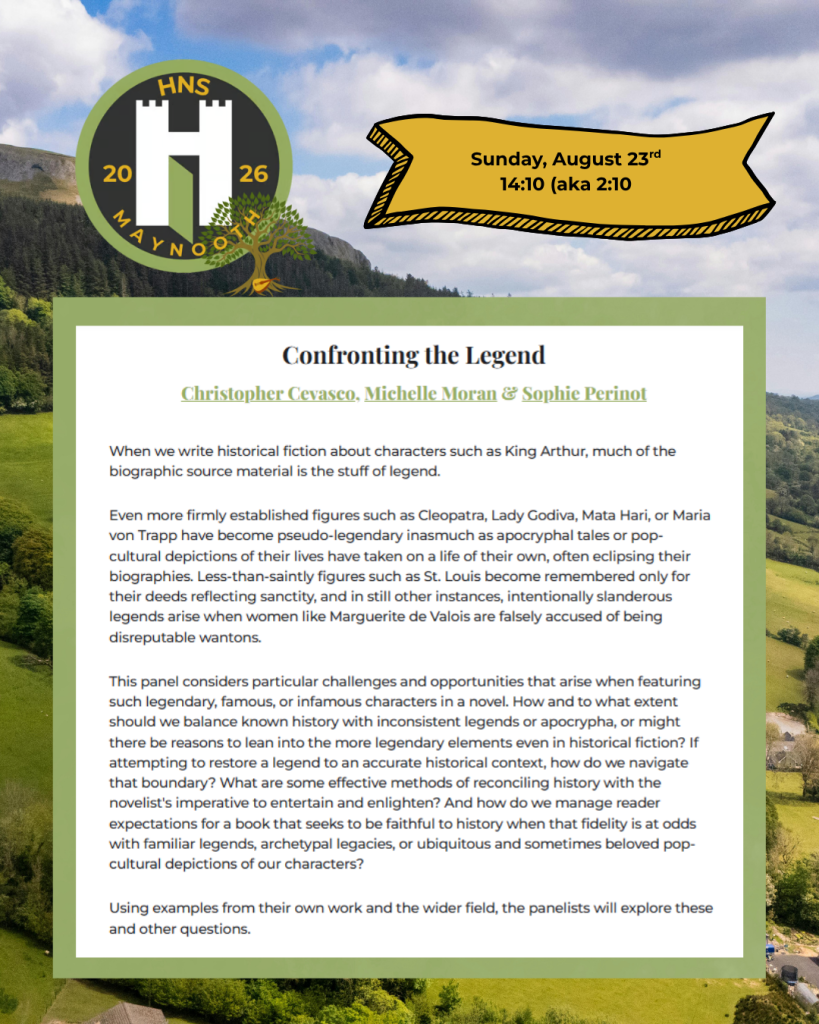
Illustrated Quotes
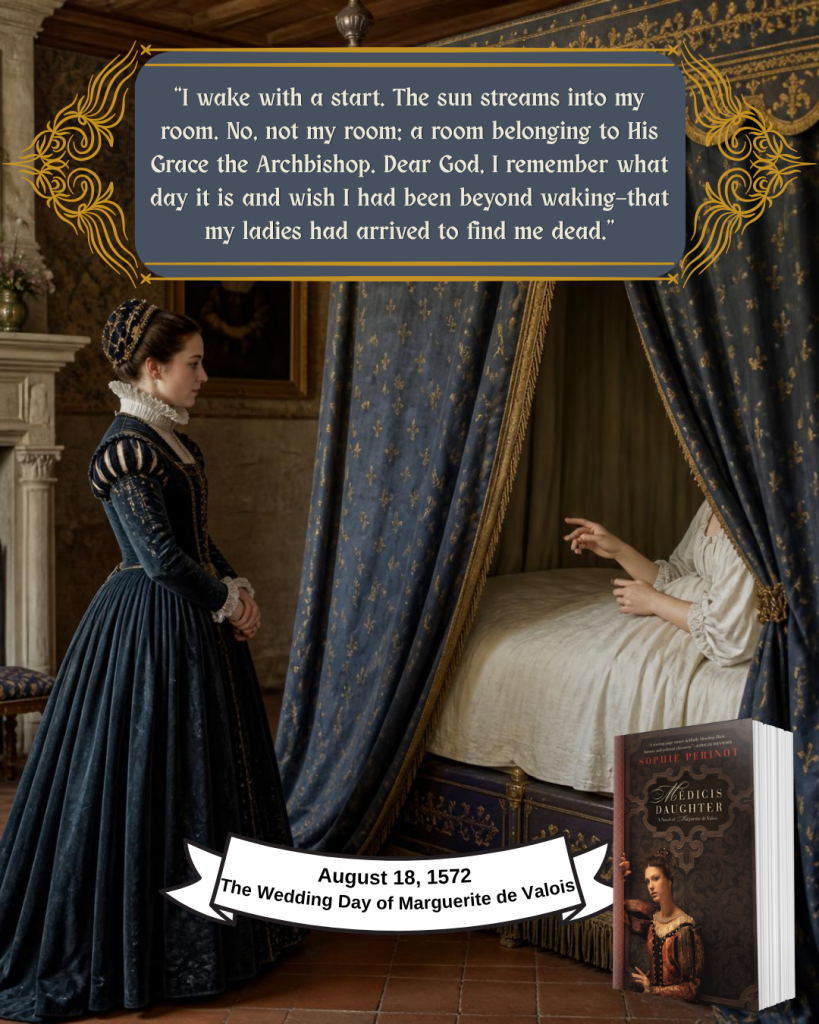
Dear Readers, as you may have noticed I tend to do illustrated quotes in spurts. Last month I went long on The Sister Queens. This month I seem to be wandering from the 13th to the 16th century and to the Valois Court of France featured in Medicis Daughter.
Because I am a writer who looks to reintroduce or rehabilitate figures forgotten or misrepresented in history Margot meant a great deal to me as a character as I crafted that novel. The least favorite child of her mother, never considered unless it was as a political pawn, and then defamed by history when her husband needed a divorce, Margot was in fact a brilliant woman with a political savvy that approached that of her mother, Queen Catherine de Medicis.
For those of who’ve read Medicis Daughter, what did Margot’s situation make you feel? Were you proud of her in the end? I certainly was.

Living In History
Some were just curious. Some clearly thought I was crazy because their image of England is London and the south.
My standard reply was two fold. First, why NOT York? And second that when I was in York I had the ability to live in history, linger over teas and knock around in pubs. In other words–my dream life.
Then I got the Talent Visa and–after dreaming of it for a decade–moved to the center of York, with Clifford’s Tower as a near neighbor and an easy walk to the Minster for Evensong.
As the end of my first year living in the city, I still get asked why I chose York. So I thought I’d do more sharing, yes of pubs and teas, but most of how I am not kidding when I talk about living in history.
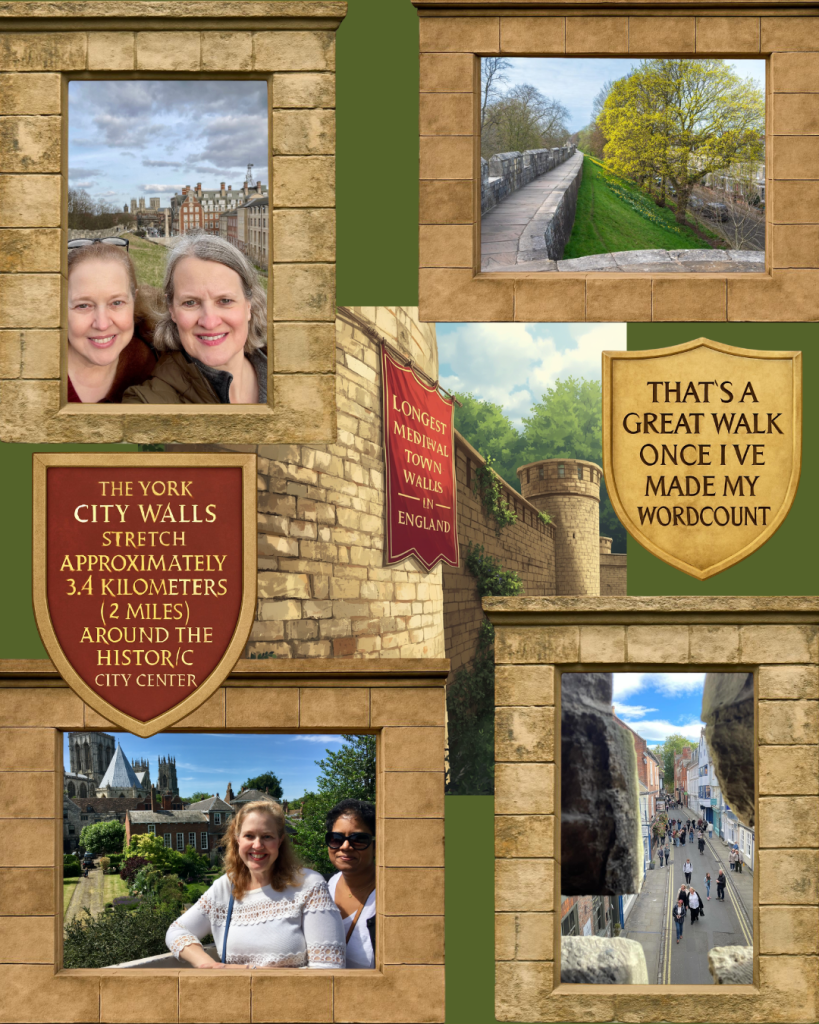
So visitors to the UK, come north. I promise you, you will not be disappointed.
The Seventh Crusade Was About to Begin . . .
On June 4th 1249—only eight days short of the one-year anniversary of her husband King Louis IX of France taking the pilgrim staff at St. Denis—Marguerite of Provence, Queen of France and one of two main characters in my novel THE SISTER QUEENS—spots the outline of the Egyptian port city Damietta from her ship.
The French fleet had been separated by a storm on their long journey, so only 700 of the 1800 ships that departed together arrived at Damietta on that day, with King Louis, Queen Marguerite and Jean de Joinville (counselor to the King and eventually chronicler of Louis life including the crusades) on one of them. The rest of the ships eventually landed 200 miles away at Acre.
When shore comes into view, Louis thinks he sees the sultan’s main army guarding the beach, when, in fact, he the men he glimpses are only an advance guard led by Fakhr ad-Din the sultan’s best general (and commander in chief of his army to oppose the French).
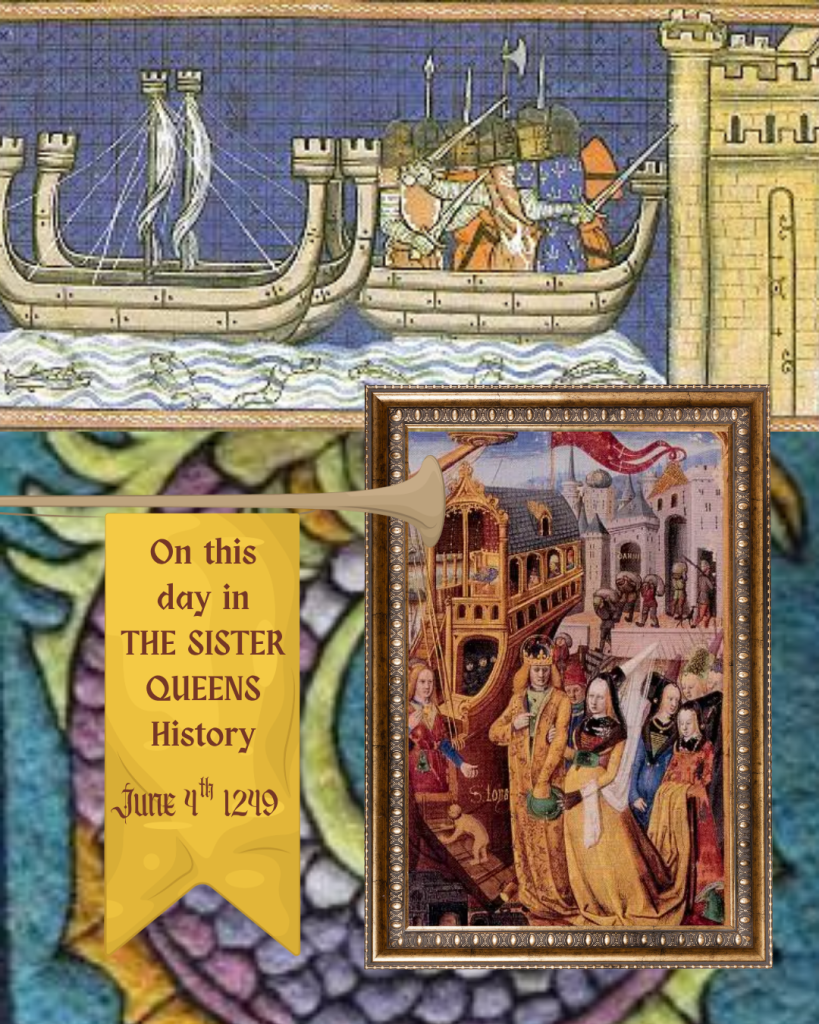
The sight of the enemy is oddly beautiful—with the sun shining off the golden armor and attire of the sultan’s men. The King makes the decision to attack first thing the next morning, without waiting for the ships that have not yet arrived. The seventh crusade is about to begin.